How to start with the Guitar

Maybe, when you want to start learning to play an instrument it might be difficult and a little fearful, but that doesn't mean you can't achieve it if you dedicate yourself to it. Here I'll tell you how I gradually progressed in learning to play the guitar.
1. Learn the parts of the Guitar
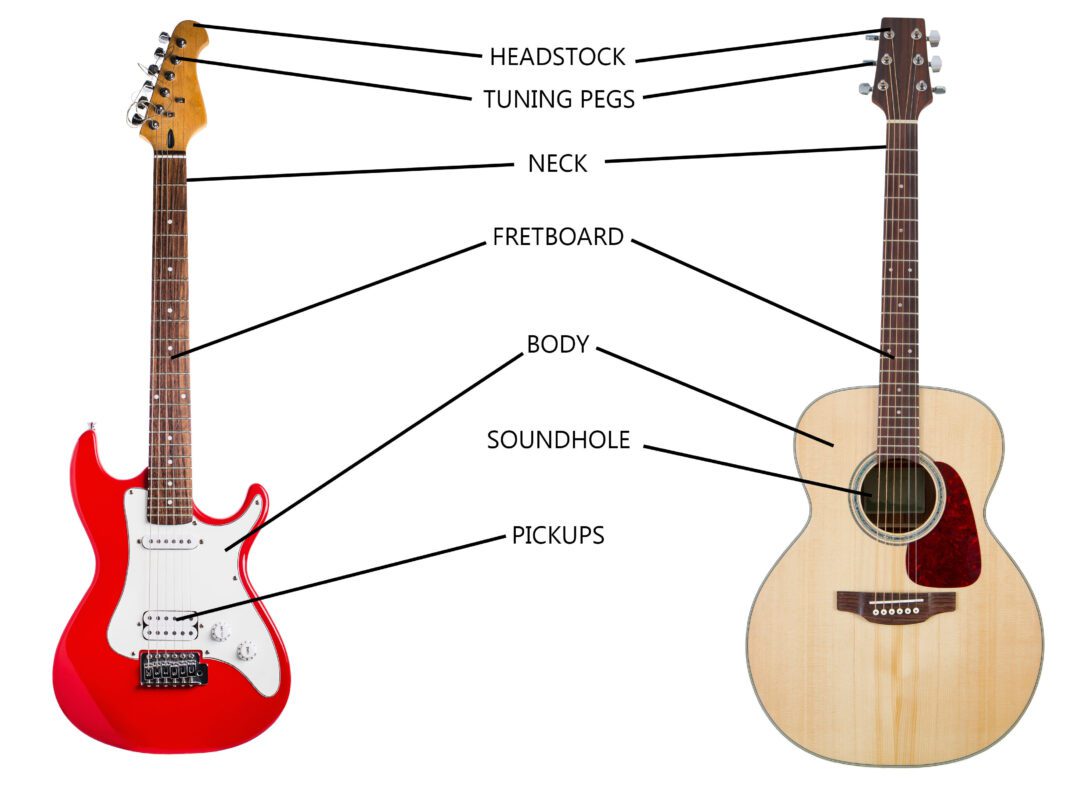
To begin, you should learn the parts of the guitar; this will make it easier to identify them and understand their function. Also, if you start by watching YouTube tutorials, most users will use these terms when teaching you a song, so knowing what each part is will make learning easier and faster.
The parts of the guitar are the following:
• The Headstock
Situated at the end of the neck, the headstock plays a vital role in maintaining the tension and tuning of the strings. It holds the tuning pegs, which are used to adjust the tension of the strings and achieve the desired pitch.
• The Neck
The neck is the long, slender part of the guitar that connects the headstock and the body. It is typically crafted from wood and varies in length, width, and shape. The neck houses the fretboard, where the player presses the strings to produce different notes.
• The Tuning Pegs
Tuning pegs, also known as machine heads, are located on the headstock. These small, cylindrical components allow you to adjust the tension of each string individually. By turning the pegs clockwise or counterclockwise, you can raise or lower the pitch of the strings to achieve the desired tuning.
• The Fretboard
The fretboard, also sometimes referred to as a fingerboard, is a flat surface attached to the neck, usually made of wood. It is divided into sections called frets, which determine the pitch of the notes produced when the strings are pressed against them. By pressing the strings against different frets, guitarists can produce a wide range of musical notes and create melodies and chords.
• The Body
The body of a guitar is the main resonating chamber that amplifies the sound produced by the strings. It comes in various shapes and sizes, such as dreadnought, concert, or electric guitar bodies.
• The Soundhole (Acoustic guitars)
In acoustic guitars, the body features a soundhole. This circular opening allows the sound to escape and resonate, enhancing the instrument’s volume and tonal characteristics.
• The Pickups (Electric guitars)
Unlike acoustic guitars, electric guitars have pickups. These electromagnetic devices are usually located beneath the strings and convert the string vibrations into electrical signals. The signals are then sent to an amplifier, which produces a louder sound.
2. Start step by step
Don’t despair when learning, don’t skip lessons or try something that is not yet within your capabilities, start from the lowest level and progress over time, practice and master what you can do before moving up a level.
You can start with the technique called ‘fretting’, where you press the frets with your fingers and play songs by following their melody with each note you play. It’s a good practice to start with and get your fingers used to the speed required for this instrument. When you master this, you can move on to practicing chords and playing more structured songs.
3. Learn the chords
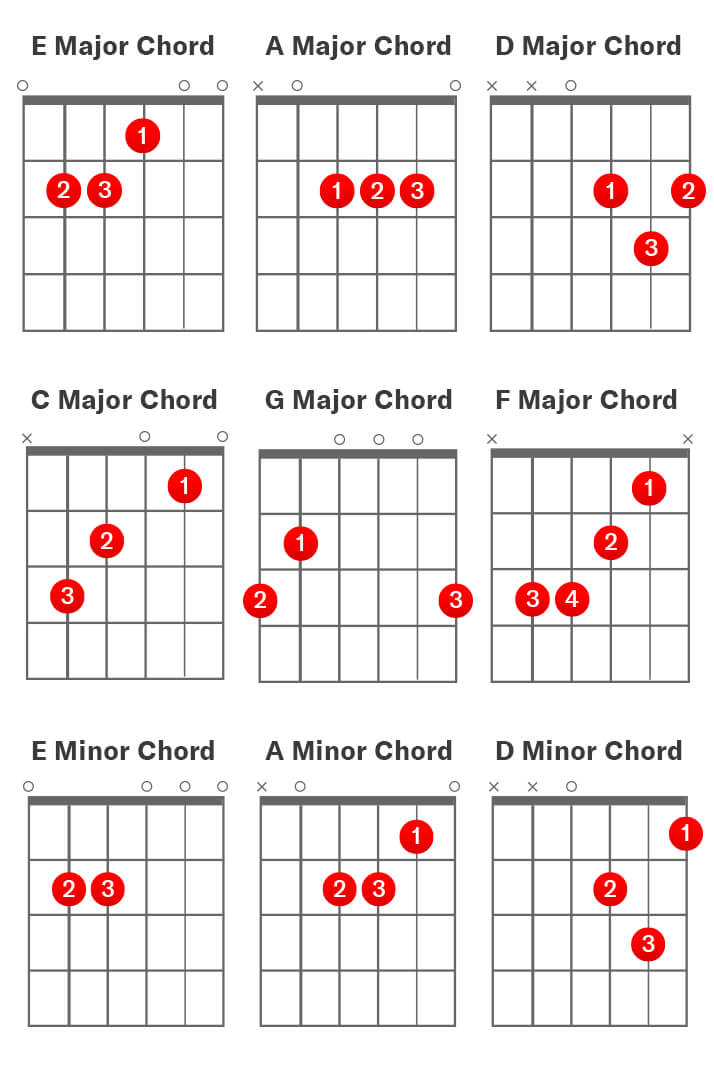
After mastering fretting, it’s time to move on to chords. These are very important; in fact, they’re what you absolutely must learn if you want to play guitar, as every song is made up of them. Learn the main chords (C, D, E, F, G, A, B) and the easiest ones to play. Then you can explore different pitches (sharp “#” or flat “♭”) and gradually discover more about these terms.
4. Practice, practice, and more practice
Like everything in life, it takes practice, lots of practice. Take your time, go at your own pace, and don’t get discouraged. Practice in your free time, whenever you feel like it, or even just when you remember you have a guitar tucked away in your closet.
“Practice makes perfect”, and this is no exception. If you want to improve, you must practice to progress. So do it.
Well, I hope everything I’ve said helps. Enjoy your trip; I know you’ll like. Good luck!
Thanks for reading this post. See you next time. Goodye!